Must‑know medications for nursing students tend to fall into the same high‑yield drug classes you’ll see again and again in clinicals, exams, and the NCLEX. In this guide, you’ll get a clear, nursing‑friendly overview of the must‑know medications for nursing school so you can stop feeling overwhelmed and start studying smarter.
Why these meds matter
From first‑semester pharm to NCLEX, you’re not expected to memorize every drug in the formulary but you are expected to recognize the most common classes, prototype drugs, and safety red flags. Focusing on essential medications for nursing school helps you build a strong foundation for safe medication administration, prioritization, and patient education.
When you organize meds by class, prototype, nursing considerations, and key side effects, you’ll start to see patterns, which makes studying much easier than chasing random drug names. Use this list as a roadmap for what to prioritize in your “must know medications for nursing students” study sessions.
How to study must‑know meds
Before we jump into drug classes, let’s talk strategy. The most efficient way to master must‑know medications for nursing school is to study prototypes and patterns—not single drugs in isolation.
Helpful approaches include:
- Learn by class: Know what the class does (e.g., “lowers blood pressure,” “prevents clots”), then memorize 1–2 prototype drugs per class.
- Use suffixes: Many meds share endings that hint at their class, like −olol for beta‑blockers or −pril for ACE inhibitors.
- Focus on nursing pearls: For each prototype, learn why it’s given, what to assess before/after, and the big side effects or safety warnings.
This way, when you see a new drug name on an exam or in clinical, you can still guess the class and action from the suffix and context.
Pain meds (analgesics)
Pain management is everywhere in nursing school and practice, so analgesics are absolutely must‑know medications for nursing students. You’ll see both non‑opioid and opioid analgesics in almost every clinical setting.
Key examples to know:
- Non‑opioids: Acetaminophen (paracetamol), ibuprofen, aspirin.
- Opioids: Morphine, hydromorphone, oxycodone.
Big nursing points: monitor pain scores, vital signs, and sedation; watch liver function and total daily dose with acetaminophen; and assess respiratory rate, level of consciousness, and fall risk with opioids. Patient teaching often includes avoiding alcohol, not exceeding recommended doses, and safe storage of opioid meds at home.
Antibiotics
Antibiotics are another core group of essential medications for nursing school, because infection shows up in nearly every system you’ll study. You don’t need to memorize every antibiotic, but you should know the major classes and one or two prototypes from each.
Common antibiotic classes and examples:
- Penicillins: Amoxicillin.
- Cephalosporins: Ceftriaxone.
- Fluoroquinolones: Ciprofloxacin.
- Glycopeptides: Vancomycin.
Big nursing points: check allergies (especially penicillin/cephalosporin cross‑reactivity), monitor for rash or anaphylaxis, watch kidney function and drug levels for nephrotoxic agents like vancomycin, and stress finishing the full course of antibiotics.
Antihypertensives and cardiac meds
Cardiovascular drugs are some of the most heavily tested must‑know medications for nursing students, both in school and on NCLEX. You’ll see them constantly on med‑surg floors.
High‑yield cardiac meds and patterns:
- ACE inhibitors: Lisinopril (−pril).
- Beta‑blockers: Metoprolol (−olol).
- Calcium channel blockers: Amlodipine, diltiazem.
- Diuretics: Furosemide (loop), hydrochlorothiazide (thiazide).
Nursing priorities include checking blood pressure and heart rate before giving, monitoring electrolytes (especially potassium with ACE inhibitors and diuretics), watching for orthostatic hypotension, and teaching patients to change positions slowly to avoid dizziness and falls.
Anticoagulants and antiplatelets
Because clots, strokes, and DVTs are major nursing concerns, blood thinners are also essential medications for nursing school. You’ll need to know how these drugs prevent clots and what to watch for.
Key prototypes:
- Anticoagulants: Heparin, warfarin.
- Antiplatelets: Aspirin (low dose), clopidogrel.
Nursing priorities: monitor for signs of bleeding (bruising, dark stools, nosebleeds), check lab values like aPTT for heparin and INR for warfarin, verify dosing carefully, and teach patients about bleeding precautions (soft toothbrush, electric razor, reporting unusual bleeding).
Insulin and diabetes meds
Glucose control is a huge part of inpatient and outpatient nursing care, so insulins and common diabetes meds are absolutely must‑know medications for nursing students.
Focus on:
- Insulin types: Rapid‑acting (lispro), short‑acting (regular), intermediate (NPH), and long‑acting (glargine).
- Oral meds: Metformin is the classic first‑line oral agent in type 2 diabetes.
Nursing considerations include knowing onset, peak, and duration for each insulin type, checking blood glucose before giving, monitoring for hypoglycemia (sweating, shakiness, confusion), and teaching patients about consistent meals, site rotation, and how to recognize and treat low blood sugar.
Respiratory meds
If you’re rotating through med‑surg, ER, or pediatrics, you’ll see bronchodilators and respiratory meds constantly another reason they’re essential medications for nursing school.
Key respiratory meds:
- Short‑acting bronchodilator: Albuterol (salbutamol).
- Anticholinergic inhaler: Ipratropium.
- Inhaled corticosteroids: Fluticasone, budesonide.
For these meds, you’ll assess lung sounds, respiratory rate, and oxygen saturation, monitor for tachycardia or tremors with albuterol, and teach patients to rinse their mouth after inhaled steroids to reduce the risk of oral thrush.
Psych meds (depression and anxiety)
Mental health medications are increasingly emphasized in nursing programs and on NCLEX, making them part of your “must know medications for nursing students” list.
High‑yield psych meds:
- SSRIs: Sertraline, fluoxetine.
- Benzodiazepines: Lorazepam.
- Antipsychotics: Olanzapine, risperidone.
You’ll need to know black box warnings (like increased suicide risk early in SSRI treatment), watch for CNS depression with benzodiazepines, monitor weight and metabolic changes with some antipsychotics, and teach patients not to stop these meds abruptly without talking to their provider.
Allergy, GI, and “everyday” meds
Some medications feel “basic” but are still must‑know meds for clinicals and exams because you’ll give them daily. These include allergy and GI drugs:
Common examples:
- Antihistamines: Diphenhydramine, loratadine.
- Antiemetics: Ondansetron, metoclopramide.
- Antacids/PPIs: Omeprazole.
Nursing points: watch for sedation and anticholinergic effects with first‑generation antihistamines, monitor QT prolongation risk and constipation or headaches with ondansetron, and teach patients about timing GI meds around meals and other medications.
Make your own med cheat sheets
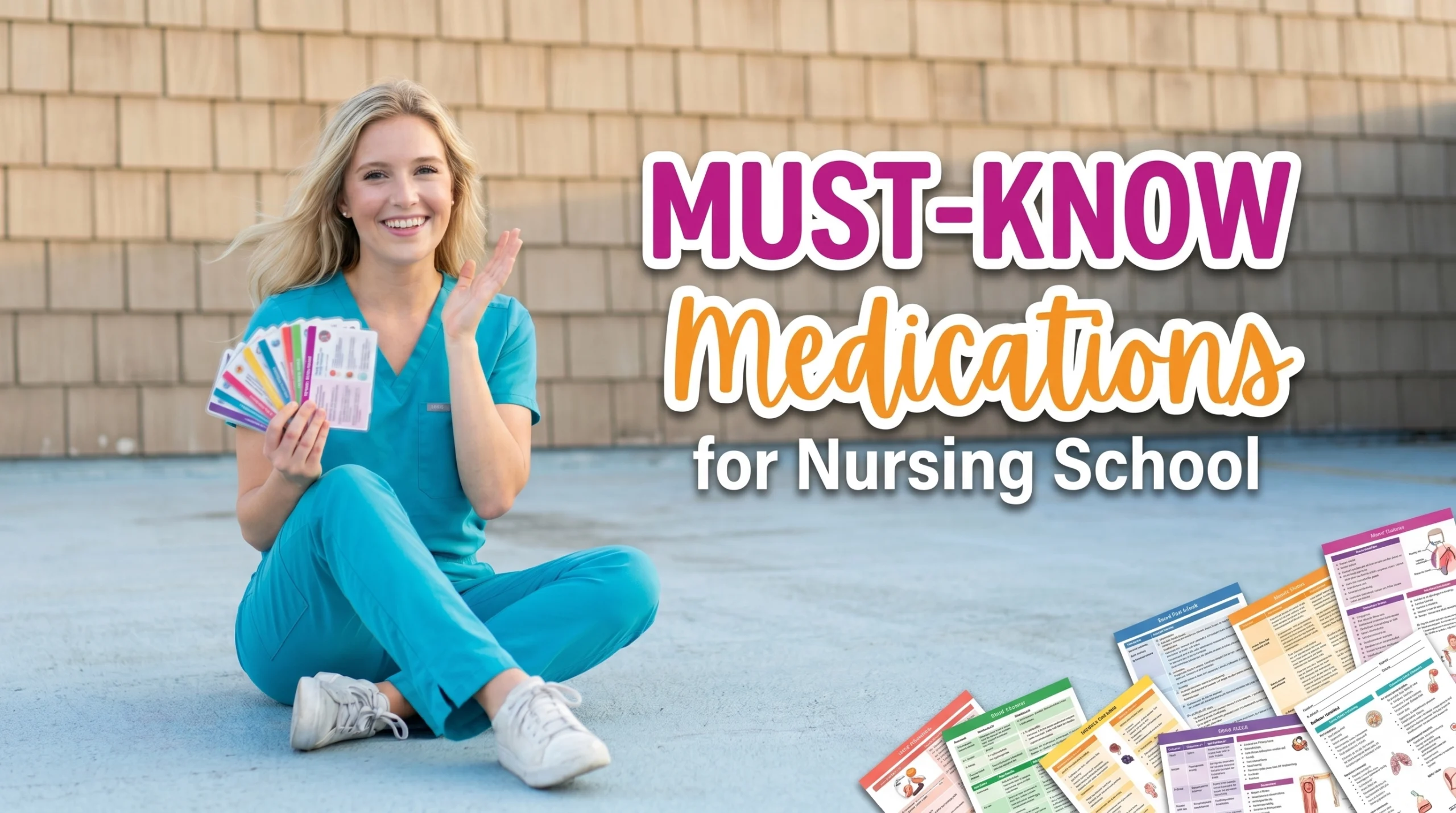
The best way to lock in must‑know medications for nursing school is to turn this list into your own quick‑glance pharm cheat sheets. For each class, create a simple chart with columns for:
- Drug class and prototype
- Mechanism (in plain language)
- Why it’s given
- Need‑to‑know side effects
- Nursing considerations and patient teaching
You can build these from your lectures, drug guides, and trusted online nursing resources so they match what your instructors emphasize. Over time, you’ll notice the same meds and patterns showing up in clinical, on exams, and in NCLEX practice questions which is exactly how you know you’re focusing on the right must‑know meds.